
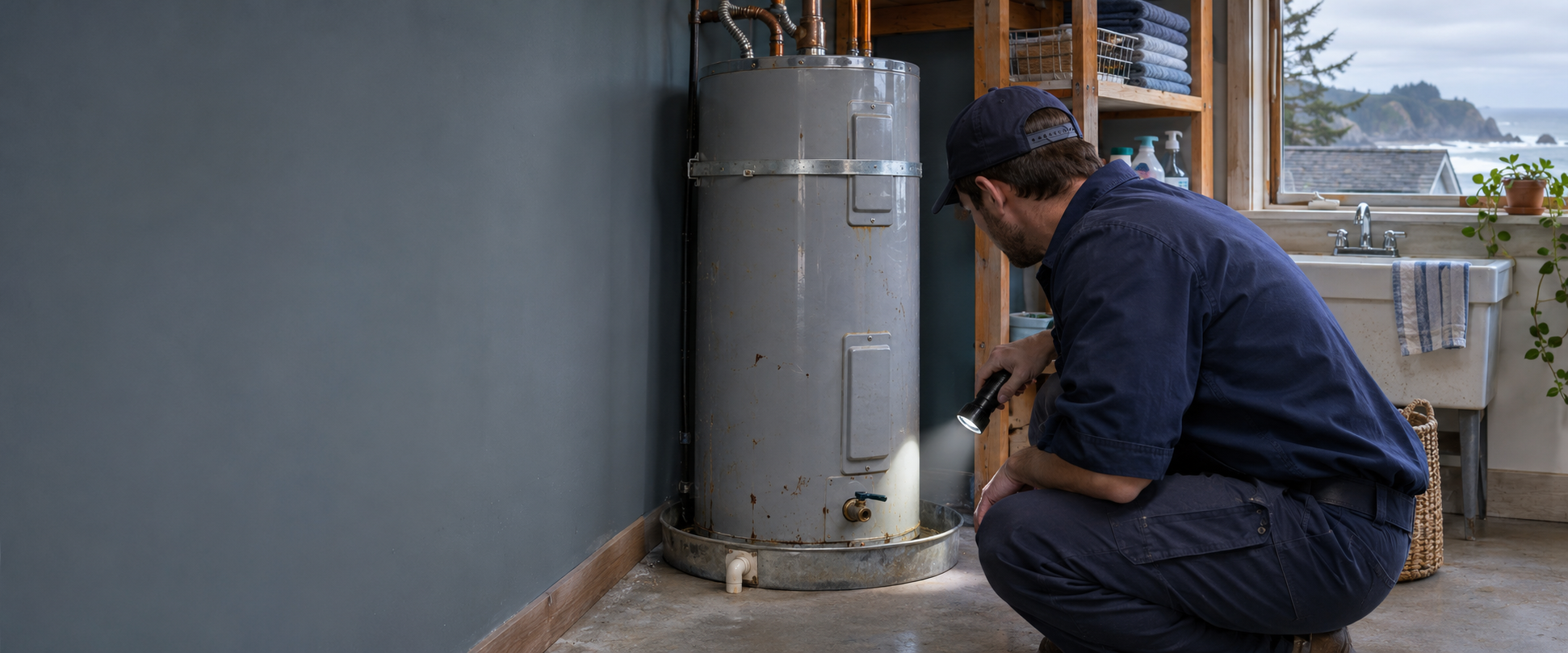
Repair your water heater if the tank is sound and the problem is a replaceable part, such as a heating element, thermostat, or drain valve. Replace it if the tank itself is leaking or has significant corrosion. For a conventional tank water heater around 10 to 12 years old, lean toward replacement when repairs are expensive or breakdowns keep happening.
A cold shower or a puddle in the garage can make the decision feel urgent. But a puddle beneath the heater could come from a fitting above it, and lukewarm water could be a failed electric element or simply more demand than the tank can handle. Here’s how Newport, Oregon homeowners can tell what needs immediate attention, when a repair makes sense, and what to compare if it’s time for a new water heater.
When is it worth repairing a water heater?
Repair is usually the better value when the unit is relatively young, the tank is in good condition, and a plumber can trace the problem to one part. Newport Plumbing’s starting point for a conventional tank is to consider a repair first when the unit is under about eight years old and the fault is minor.
- Electric tank: A failed heating element or thermostat can leave you with lukewarm water, less hot water than usual, or no hot water.
- Gas tank: Depending on the model, a failed thermocouple, igniter, or other ignition component can keep the burner from heating the water.
- Water at a valve or fitting: A leaking drain valve or pipe connection may be repairable when the tank itself is sound.
- Tankless unit: A technician can check the model’s error code and determine whether it needs maintenance, a part replacement, or a closer look at the heat exchanger.
Check warranty coverage before approving work. Have the model and serial number handy and ask which parts and labor are covered. Even when a manufacturer covers a part or tank, there may still be labor or installation charges.
When should you replace a water heater?
A confirmed leak from the tank itself is the clearest reason to replace a storage water heater. Once the vessel that holds the hot water has failed, replacing an external valve or fitting won’t solve the leak. Widespread corrosion, repeat failures, or a major repair on an older tank also make replacement worth considering.
Around the 10-year mark, start planning for replacement so you have time to compare options. A well-functioning older unit can still be worth keeping, and a newer tank with a confirmed vessel leak still needs replacement. The eight- to 12-year guidance applies to conventional storage tanks. For tankless and hybrid units, weigh the model’s condition, repair history, parts availability, and warranty.
How can you tell how old your water heater is?
Start with the installation invoice, warranty registration, or a service sticker on the heater. If those are missing, look for the manufacturer’s label on the outside of the unit. Some labels show a manufacture date. Others list a serial number the manufacturer can use to identify it. The manufacture date gives you a rough age, while the installation record is more useful for checking when warranty coverage began.
What do common water heater symptoms mean?
Scroll sideways if any columns are out of view.
| Symptom | What it could mean | What to do next |
|---|---|---|
| No hot water anywhere | A power, heating, or ignition problem. | Get a diagnosis before pricing a replacement. Note any displayed error code. |
| Hot water runs out sooner than it used to | A failed electric element, sediment in a storage tank, or increased household demand. | Note whether it happens during one shower or only when several fixtures are running. |
| Water on the floor or in the drain pan | A fitting, valve, condensation, or a tank leak. Water can travel down the outside of the heater before pooling. | Get the source checked promptly. A leaking tank usually requires replacement. |
| Rust-colored water | Corrosion in the heater or plumbing, or a supply-side issue. | Compare hot and cold at more than one tap. Tell your plumber whether the discoloration is limited to the hot side. |
| Popping or rumbling | Sediment may have accumulated in a storage tank. | Ask whether maintenance is appropriate given the tank’s age and condition. |
| Dripping from the relief discharge pipe | A valve issue or a temperature or pressure problem. | Have it checked promptly. Never cap or plug the discharge pipe. |
When the problem affects only one shower or sink, say so when you call. A fixture valve or cartridge may explain why one outlet goes cold while the rest of the home still has hot water.
What should you do if your water heater is leaking?
Stop using the heater and call a plumber promptly. If you can safely reach the heater’s cold-water shutoff from a dry spot, close it. Follow the manufacturer’s shutdown instructions only if you can do so safely. Stay clear of standing water near electrical equipment. A photo from a safe, dry spot can help show whether water is coming from above the tank, a side pipe, or underneath it.
If you smell gas near the water heater or elsewhere in the home, leave immediately. Avoid using switches or a phone inside. From a safe distance, call 911 and your gas utility. Read NW Natural’s gas leak safety guidance.
How much should you spend repairing an older water heater?
Compare the total repair quote with the total installed cost of a suitable replacement. If the repair approaches half the installed replacement cost and the tank is already near the end of its expected service life, replacement usually offers better value. A straightforward repair on a sound, younger heater can still make sense, especially with warranty coverage.
Ask what each quote includes. For a repair, check parts, labor, warranty coverage, and whether the work addresses the cause of the failure. For replacement, check removal and disposal, equipment and labor, any needed plumbing, electrical or venting changes, and whether permit costs are included if applicable. A tankless conversion or hybrid upgrade can involve more installation work than replacing a tank with a similar model.
Which replacement water heater makes sense for a Newport home?
The best fit depends on when you use hot water, the space you have, and which utilities already serve the home. Think about a busy morning at your house or coastal rental. Two back-to-back showers put a different demand on the system than two showers running at once while the dishwasher is on.
- Conventional electric or gas tank: A similar tank can be a straightforward replacement when the old setup met your needs. Compare the first-hour rating, which estimates how much hot water the unit can supply in an hour starting with a fully heated tank.
- Tankless water heater: An on-demand unit can free up space, but its capacity depends on how many fixtures run at once and how much the incoming water needs to be warmed. Ask your installer to size for winter inlet water conditions and confirm any fuel, power, or venting changes.
- Hybrid heat pump water heater: A hybrid can lower electricity use compared with a conventional electric tank. Ask whether the proposed spot has enough air, a way to drain condensate, and room for service. A tight closet and an open utility room can have very different installation requirements.
If the heater sits upstairs, near finished flooring, or in a coastal rental that can go unoccupied between stays, ask about a drain pan, leak alarm, or automatic water shutoff suited to the installation. For a tankless system, the U.S. Department of Energy’s tankless sizing guidance explains how flow and temperature rise affect performance.
What should you tell a plumber when you call?
Share the brand, model, approximate age, and whether the heater is gas, electric, tankless, or hybrid. Describe when the problem started, whether it affects every fixture, and whether you see water, rust, or an error code. If the label is safely accessible, take a photo. If you’re considering replacement, mention how many showers or appliances regularly run together and whether the current heater used to keep up.
Who can help you decide in Newport, Oregon?
Newport Plumbing, Inc. has served Newport and the Oregon Coast since 1978. Our team can identify where a leak is coming from, explain what a repair would involve, and walk you through tank, tankless, or hybrid options if replacement makes sense.
Explore our water heater repair and installation services in Newport, Oregon or call (541) 265-7030 to talk through what you’re seeing, ask about an estimate, or schedule an in-home evaluation.